
Michael Pena Interview, Lions for Lambs

Posted by: Sheila Roberts

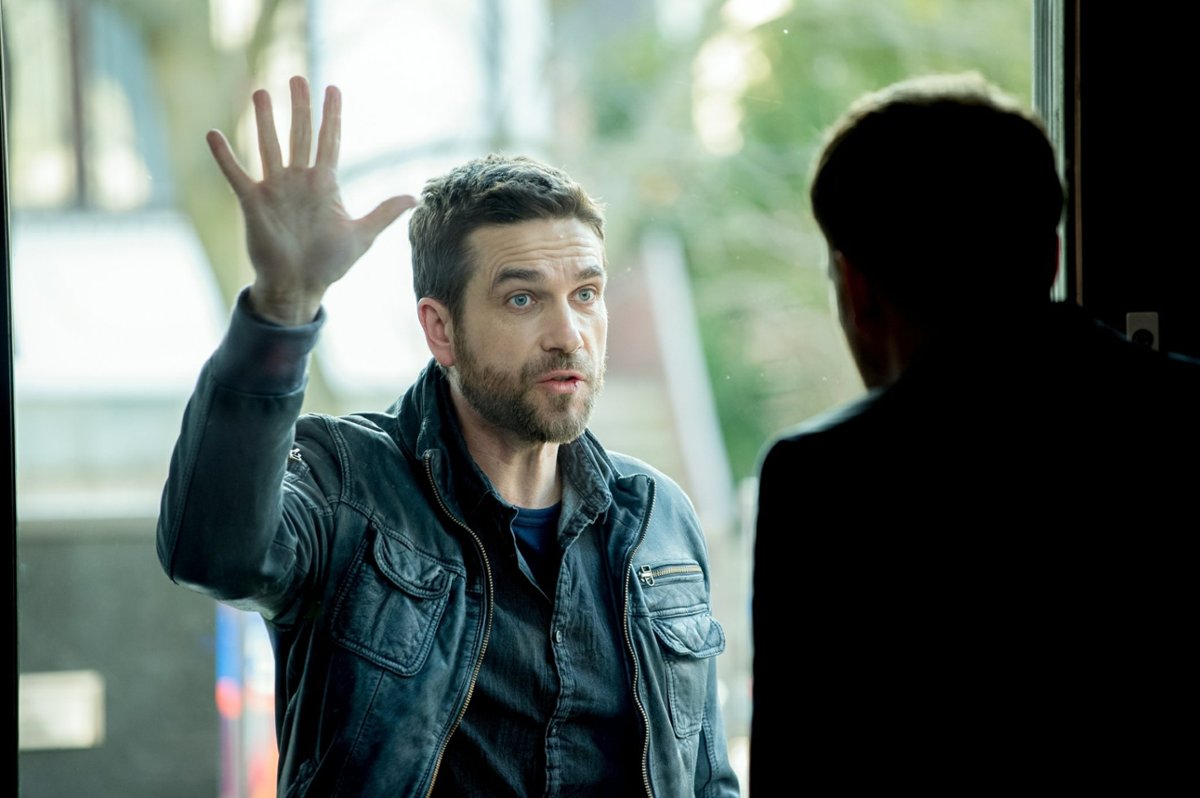
MoviesOnline recently sat down with Michael Peña at the Los Angeles press day for his new movie, "Lions for Lambs,” a powerful and gripping story that digs behind the news, the politics and a nation divided to explore the human consequences of a complicated war.

Directed by Academy Award winner Robert Redford, the story begins after two determined students at a West Coast University, Arian (Derek Luke) and Ernest (Peña), follow the inspiration of their idealistic professor, Dr. Malley (Redford), and attempt to do something important with their lives. But when the two make the bold decision to join the battle in Afghanistan, Malley is both moved and distraught. Now, as Arian and Ernest fight for survival in the field, they become the string that binds together two disparate stories on opposite sides of America. In California, an anguished Dr. Malley attempts to reach a privileged but disaffected student (Andrew Garfield) who is the very opposite of Arian and Ernest. Meanwhile, in Washington D.C., the charismatic Presidential hopeful, Senator Jasper Irving (Tom Cruise), is about to give a bombshell story to a probing TV journalist (Meryl Streep) that may affect Arian and Ernest's fates. As arguments, memories and bullets fly, the three stories are woven ever more tightly together, revealing how each of these Americans has a profound impact on each other and the world.

Michael Peña has distinguished himself in Hollywood as an actor with a wide range of performances who has worked with an impressive roster of award-winning directors. Pena earned notable recognition for his performance in Paul Haggis’ provocative Oscar winning film "Crash,” alongside Don Cheadle, Matt Dillon, and Terrence Howard. Critically acclaimed for the film’s interpretation of complex race relations in contemporary America, Peña has garnered multiple best ensemble nominations for his role as Daniel the locksmith, winning awards from the Screen Actors Guild and the Broadcast Film Critics Association for the cast’s performance.

Peña was most recently seen starring opposite Mark Wahlberg in Antoine Fuqua’s "Shooter.” He recently starred opposite Nicolas Cage as a true-life based Port Authority policeman in Oliver Stone’s highly anticipated film "World Trade Center,” which chronicled the heroism of American servicemen in the direct aftermath of the September 11th attacks. He also appeared in Alejandro Gonz ález Iñ árritu’s "Babel” and will next be seen in "The Return” co-starring Rachel McAdams and Tim Robbins. His other credits include Clint Eastwood’s "Million Dollar Baby,” Matthew Ryan Hoge’s”The United States of Leland,” and Gregor Jordan’s "Buffalo Soldiers.”

On television, Peña was most recently seen starring in the HBO film "Walkout.” Based on the true story of a young Mexican American high school teacher who helped stage a massive student walkout in the mid 1960s, Peña received an Imagen Award for Best Actor in the television category for his performance. He also guest appeared on the F/X drama "The Shield” for its fourth season as one of the central leads opposite Glenn Close and Anthony Anderson. Other television credits include Steven Spielberg’s "Semper Fi.”

Michael Peña is a fabulous guy and we really appreciated his time. Here’s what he had to tell us about his new movie:

Q: So what’s your interpretation of this film now that you’ve done it?

MICHAEL Peña: Now that I’ve done it? My interpretation? It’s a little late for that. [Laughs] When I look at it, I just want to do movies that entertain me so I think it turned out to be an entertaining film. It’s kind of cool because it reminds me a little bit of a play almost. It’s really refreshing for me as an actor, as an artist, to have that kind of thing in a movie. My favorite movies are like "Glengarry Glen Ross” where you have good dialogue. I know that this has a political backdrop so my …venture off into those questions and that line of thinking, but in actuality it’s like all these different, opposing questions or whatever. I don’t know. I just liked it.

Q: Were you changed politically by this film?

MICHAEL Peña: No, not really. I still don’t know what’s going on. I try to. The movie has opened me up to just trying to look for the best possible answers and who knows where to find the truth. I still don’t know.

Q: Can you talk a little about what attracted you to the project and how you became involved with it?

MICHAEL Peña: Yeah. First and foremost I thought it was the script. Like I said, it did remind me of a play and I thought that it was kind of ballsy to do this kind of movie. I don’t know how it’s going to be received but I think it is going to be a movie that people watch in later years. It’s got its own time capsule. And there’s not too many times where they show a kid wanting to go to war without it being bashed upon and also another point of view like the Senator’s point of view. It’s like at any given point, you could look at the point of views and be like "Wow, that’s really valid.” Or like the reporter’s point of view, you’re like, "Yeah. That’s valid.” You’ve got to sell papers. You’ve got to stay in business. How do you balance the two? If you’re just hard news, can you really sell papers? I don’t know if you even have a job. Those are really good questions. And then I liked the script and I liked the story and I liked what it did to me when it made me ask questions. Obviously, Tom Cruise, Myrl Streep, Robert Redford in one movie, in one movie, I was like, c’mon, I don’t know about you guys, but you almost take it for granted because you know what’s gonna happen, but I showed this to my parents and my brother and he’s like, [whispering] "Holy crap! Are you kidding me?! Tom! Myrl! Dude! And Robert Redford!” Throw in a little Robert Redford. They were pretty psyched about it. And I was like, "Oh yeah, that’s right, dude. Huh?” It’s like…

Q: It’s better not to know.

MICHAEL Peña: Exactly. It’s better not to know. If I would have seen this movie, I would have just seen it just based on them. And then because it’s like a play almost, you really get to see them act, and I think they all hit it out of the park.

Q: Can you talk about the training and the snow? Was that real snow you guys were laying in? Did you have to do some weapons training?

MICHAEL Peña: Yeah. I did have to do weapons training. There’s one scene where you see me reload a cartridge but it’s with one hand and that was such a pain in the butt, man.

Q: How many takes did that require?

MICHAEL Peña: Two. I did that because I trained for three weeks [demonstrates how to reload a cartridge with one hand]. I just kept doing it because for me, if I see something like that and then the guy doesn’t seem expert at it, it takes me out of the movie. Little things like that. There are some things that I’ll work on, but those things specifically, especially if I know they’re going to be in the movie or they won’t use it if it’s not good. Those things for me add validity to it because those guys would know what to do and I thought that it was pretty crafty to drop it, put it right under, grab it and then with one swoop.

Q: That would be a very practical thing to do.

MICHAEL Peña: Yeah. It would be if you had one arm.

Q: Where did you film those scenes?

MICHAEL Peña: In Chatsworth.

Q: It doesn’t snow in Chatsworth.

MICHAEL Peña: I know but doesn’t it sound weird. It’s like, "Where’d you film the Afghanistan scenes?” "Chatsworth, California.”

Q: Were you on the edge of the mountains up there?

MICHAEL Peña: Yeah. It was interesting because you had two mountains here and then right at the bottom, Jan Roelfs, who did "World Trade Center” with me and then "The Lucky Ones” and this one, he made an interesting platform where people could…they had storage units underneath it and what not and he built that and they had fake snow all around except where we were which I really didn’t understand and I was like, "Bra’, why were we …?” I’m like, [whispers] "I’m an actor.”

Q: What was the reason for the real snow?

MICHAEL Peña: I didn’t ask Mr. Redford, because I was like, "Whatever, Mr. Redford, it’s probably the best thing.” [Laughs] To be honest with you, I was in snow and it did help out when you were cold. Redford was like, "Oh, that was great. I really believed you were cold.” I’m like, "I’m cold.” [Laughs] It’s cool.

Q: Did it help you focus more on your character?

MICHAEL Peña: It did. It did. Sometimes it would be tough with the wind machines and the slush inside your [clothes]. If there’s slush in your…it’s not like snow, it’s like water. It’s like a slushy feeling so you’re like [inaudible whisper]. I don’t know if it’s cheesy, but then you think of the people out there and then you’re like, "I’m not going to say anything.”

Q: How did you get over the admiration factor with Redford?

MICHAEL Peña: It’s why he’s a star. It’s why he’s a legend. It’s why he is who he is. From the first meeting he was very much in communication. He’s got this ability to get… He’s very interested. He’s not trying to be interesting or whatever. He gets talking and then pretty soon you’re talking about Babe Ruth and Hank Aaron and then after you walk away, you’re like [whispers] "I was just talking baseball with Robert Redford.”

Q: "The Natural”

MICHAEL Peña: Yeah, "The Natural.” That was one of my favorite movies. Yeah, exactly, hitting that ball right out of the park. It was interesting. I mean you try to be professional but you can’t help but think "This guy is Robert Redford.” And then you go out and do press and they go bananas over the guy. It’s crazy. I don’t know if you guys have seen it but it’s like [whispers] "Rahhhhhh” and you’re walking onto a football field.

Q: Have you had some inspiring teachers in your life?

MICHAEL Peña: Yeah, I did. There was this guy named Mr. Lyles in Hubbard High School. I was in his math class. It was the first couple months of junior year and I used to draw a bunch, just whatever because I was bored. And then he walks over and he says, "What’s up, man?” I was like, "What’s up, Mr. Lyles?” And he’s like, "What’s up with the word problem, bra’?” And he put the word problem on the board and I was like, "I already got the answer.” But he was the first person to actually come up to me and say, "What are you doing?” and "Why are you doing this?” Because I would always hand in my work on time and I was like, "I already got the answer” and everybody else was still working on it. And he’s like, "What is it?” and I’m like "It’s…” and then I just wrote down the answer and circled it. And he was like, "What’s up, man?” And then he says, "You know what? You could be in calculus.” I was like, "What?” And so I took two math courses in junior year to make calculus my senior year. He’s the first person to actually take that step and it kind of happened at the same time because I was doing sports and stuff. And it’s funny but you get to really realize that wow, hard work pays off and especially in sports because you’re not very good in the beginning. You work really hard and then you get that jump shot that you didn’t necessarily have last year, crossover or whatever, you know, in football, the right pattern, how to fake. You actually get those through hard work so that was a big life lesson as well.

Q: Were you able to translate that into acting somehow? Did you have any acting teachers that inspired you?

MICHAEL Peña: No, with this one, I went to an open call. I had never acted before and I remember one of the producers said, "So, can you act?” I was like, "We’re going to find out, man.” Because I had no idea. And then after that he’s like, "Who’s your agent?” I was like, "What?” He said, "Who’s your agent?” I was like, "Look, man, you asked me four times already, buddy.” Right from there I just kept working but I had a lot of learning to do. It isn’t as easy as you think it is. I mean at first. When you’re a kid, you’re like, "Whatever. It’s just reading lines and blah, blah, blah.” You know, it’s tough.

Q: Did you have any favorite movies growing up?

MICHAEL Peña: Yeah. "The Karate Kid.” Things like that. "The Never Ending Story,” "Rocky,” you know, movies like that.

Q: When you see names of the dead in Iraq or Afghanistan scrolling across the bottom of the screen on CNN, is that a different experience for you now?

MICHAEL Peña: It is, but it was before this movie because I have friends that have gone off to the war. Some of them have come back and some of them haven’t. You pray to God that it’s nobody you know. But at the same time, I talked to those guys and this is kind of my salute to those guys in a way, in a selfish way.

Q: Is there’s a process of visualization of what they’ve gone through that you didn’t have before?

MICHAEL Peña: Absolutely man. We did the last scene last where we stand up. Right? Basically it was just us standing up and falling and it was an interesting thing that me and Derek were actually… I was like, [whispering] "Whoa man, I’m really sad right now.” Even the characters, seeing them go through this is really saddening. You imagine it while you are doing it. And also I did a lot of research of documentaries and what not so you can’t help but think of that. You can’t. You have to have respect for the troops. I mean that’s the way I think. Whatever you think about the war or the government, as far as the troops go, you’ve got to wish them the best. It’s tough to see somebody not with us anymore.

Q: What are your thoughts on the junior year project that Derek and your character did?

MICHAEL Peña: You know what? I actually thought that was kind of cool. To be honest with you, I thought that was pretty interesting because that was me. I actually came out to Los Angeles when I was 19, by myself, with $3,000 and I was like I’m going to make it out here somehow. I had to live in a van and I stayed in hotel rooms and I stayed on people’s couches sometimes and then I got going. I got moving. And it aids you with life experience in that you think about things differently. Statistics aren’t just statistics. They’re actual people. The statistics represent people. They’re not people. And it showed me that. I grew up poor as well so I think you get to understand life a little better when you actually have mass, when you can actually see it as opposed to just read it. And I think we’d have a lot of caring politicians if they were to see some of the things that I saw.

Q: What would you like an audience to take from this film?

MICHAEL Peña: To be honest with you, I think the through line which is pretty evident with everyone else is to get involved. And I think that viewpoints are necessary and accepted. If everybody’s going one way and nobody’s going the other way, how do you know that there’s any… I don’t like going with the crowd. When I read a paper, I want to see "Oh this guy is pro but why is this guy not?” It’s interesting that they both put up really good arguments and then you can decide for yourself. To actually make a decision to be engaged is the thing that I think follows Andrew Garfield’s character. It’s good to be engaged. There was a time when I was doing acting just for the money, just to get along, and it wasn’t fun. It was not fun. And I wasn’t even making that much money because that was what I was going for. But then I was like, "You know what? I’m going to do the best possible thing.” It sounds a little cheesy but I’m like I’m gonna do the best job I can. I’m going to really invest in it. And then when I saw it, and then I saw when I didn’t do it, it was a world of difference. And it was more natural and didn’t look as sloppy and it was like I was actually communicating so I think being engaged is the message that I hope people get out of it.

Q: Do you think with the many war movies coming out this year that people will have difficulty distinguishing between them?

MICHAEL Peña: Well that’s when you’ve got to get creative.

Q: How does this film stand out from the others?

MICHAEL Peña: Well this is different altogether. I haven’t seen a movie like this. It’s not just a war movie.

Q: Is it a message movie?

MICHAEL Peña: Is it a message movie? I don’t know. To me, it’s a drama. Every movie has got to entertain. If you don’t entertain, then you could never get and hook in people. But I think this is different. It just feels like it’s different. It’s not an ordinary war movie where you’re just going off to war and shooting every 10 seconds.

Q: It raises questions even if it doesn’t necessarily offer answers and it makes people think.

MICHAEL Peña: It does raise questions. That’s what I like about it. It doesn’t tell you what to think. It’s not a preachy movie. There are times when people ask me, "Don’t you think it’s preachy?” "But how ‘bout this and how ‘bout that?” And then, by them saying and they’re like, "Oh yeah. It doesn’t give you...” I’ll just scratch that out.

Q: Doesn’t the ending take a stand against the whole war?

MICHAEL Peña: That’s so funny that you say that because people have said, "Doesn’t it take a stand for?” And says that they did what they did with integrity and loyalty and brotherhood? That’s interesting that you say that because it almost proves your own point. It is what you bring to it. Different people look at that [differently]. Even the last scene, they look at that last scene [with] what ever they bring to it which I think is great. When we were taking it around colleges, a lot of people viewed the same scene in a different way. Somebody raises their hand, "Okay. Everybody knows that it’s a very Republican movie.” And I’m like, "What!?” You know what I mean? And then it’s like, "Look, this is very left.” So they can’t make up their minds. My hat goes off to Redford because he wanted to make every viewpoint as valid as possible without invalidating it and then have six different viewpoints and you get yourself a movie.

Q: It’s a movie that gets you thinking a little instead of making a snap judgment.

MICHAEL Peña: Yeah. Exactly.

Q: Can you tell us anything about "Pinkville” or "The Lucky Ones”?

MICHAEL Peña: "The Lucky Ones” is with me, Rachel McAdams, and Tim Robbins. It’s directed by Neil Burger who directed "The Illusionist.” I think he’s a really good filmmaker and I really liked his way of filmmaking. I thought that it was…I like going with filmmakers…It’s basically like a road trip and it’s kind of a dark comedy. And then "Pinkville” is about the My Lai massacres in Viet Nam in 1969.

Q: Two more military films?

MICHAEL Peña: Yeah. I think that this is the year of the soldier in a way. I looked at all my favorite directors [to see] what was going on right now and even in "Children of Men,” it had that undertone. You had Clint Eastwood with two war movies, Oliver Stone, Robert Redford, and then you have Steven Soderbergh doing "Che” [means "Guerilla”]. All my favorite directors are doing war movies right now so it’s like, "Let’s do it.” I don’t know how much longer I have to do these kind of roles. Once I get older, I don’t think I’m gonna be able to run across a field like crazy.

Q: Or be stuck in the cold snow.

MICHAEL Peña: [Laughs] Or be stuck in the cold snow. You know what? I gotta get to my kids. I gotta get out of here.

Q: Thank you.

MICHAEL Peña: Thank you, guys. Have a good one.

"Lions for Lambs” opens in theaters on November 9th.

Share

Related Movie News

Hatchet 2 The Last Exorcism FASTER Red Hill Red Hill Red Hill Hardware The Killer Inside Me A Serbian Film The Last Exorcism