Jane Petrie Interview, 28 Weeks Later

Posted by: Michael
We had a chance to sit down and talk to Jane Petrie the costume designer on 28 weeks later.  Petrie’s feature film credit The Lives of the Saints, Shoot The Messenger, An American Haunting, Road to Damascus and the TV series Sensitive Skin.
 
She has also worked in the costume departments of The Constant Gardener, Thunderbirds, Gosford Park, Buffalo Soldiers, Captain Corelli’s Mandolin, Intimacy, The World Is Not Enough, Star Wars: Episode I – The Phantom Menace, Notting Hill, Elizabeth, The Land Girls and Oscar and Lucinda. We discussed who the people who make up district one would be; they’re all pretty young, fit, healthy, volunteer-skilled people. And we talked about if you were rebuilding who would you need and what type of skills would come in, so there are a lot of practical people, there are a lot of builders and workers and medical people, counselors, red cross, and what that would be and what it would look like…

And we figured that the military would probably be taking no risks whatsoever, within the controlled clean zone of district 1, people would be arriving in airplanes that were also bringing in other supplies, and if they won’t entirely understand the infection so the military is in control of everything that they brought into the district.

So in order to come in on one of these planes, people are only allowed light hand luggage. So we’re sort of seeing the look of it as the only things you’ll bring in with you are the clothes you stand up in, a small bag of personal belongings, and your skills… and then when you arrive you’re given your work-wear, a box of clothing that would be donated from the American people probably, we read about Wal-Mart had given boxes and boxes of clothes to New Orleans, so we’ve repeated things… so you’ll see the same kind of training shoes and the same trousers, the same jeans, repeatedly in District 1 because that’s what everybody’s been given when they arrived, so we see all of that in the depot when they’re trying to escape, you’ll see piles of clothes, so there is a sort of utopian angle as well because there’s this group of workers building a new world. And then mixed in with that there is a little bit of their story and what they’re after, so we sort of worked out those aspects that give you a framework so you can work out what kind of skills they might be coming with by the way they dress.

Q. So then is everyone walking around in uniforms with badges?

A. Yeah everybody has ID, so in the script when they arrive…Andy’s mother has 2 different color eyes, so when you arrive in the district, there is this new way of testing people, so everyone has ID in their pocket, or on a pin, or on them around their neck, so that’s part of their uniform. Like Robert Carlisle’s character has a tool belt and a radio, with swipe cards and keys…

Q. How many of these did you make?

(Pulls out a huge bag of plastic ID cards)

A. (Laughter) Well we keep making them because they keep getting covered with blood and get ruined. And there are about 6 people in District 1 if you look really closely at the crowd badges.

(Laughter)

Q. So how many people are you dressing total on this film?

A. I don’t know, there are around 40 speaking parts, and the biggest crowd is 385…and that’s coming up.

Q. What is it like to dress the infected?

A. That’s the best part! (Laughter). Well there are different sections of infecteds as well. In the beginning of this, within the timeframe of 28 Days Later, those people who have made it that far, they will be dead, but they’ll be strong and fit because they’ve survived and fought and they’re sort of the elite group of infecteds, the ones that come from towns and villages from around the farmhouse. And then there are the ones that have seen a lot of fighting and were sick and have been infected for a really long time. Then we’ve got, when the outbreak happens in District 1, we have fresh bites and new fights, and then there is another sequence where we have some infected fighting from outside District 1, so they would have come from this really filthy environment.

Q. Is there class distinction in District 1 citizens, hence all these ties and suits?

A. There is a flashback sequence, or a slight dream sequence, in an underground railway carriage, so we have some commuters where an infection starts to spread throughout the carriage and it’s almost like a flashback to what happened before things started getting cleaned up.

Q. Is it easy to get a hold of military uniforms right now?

A. There is not much of it around right now because of the war.

Q. And American military uniforms, too.

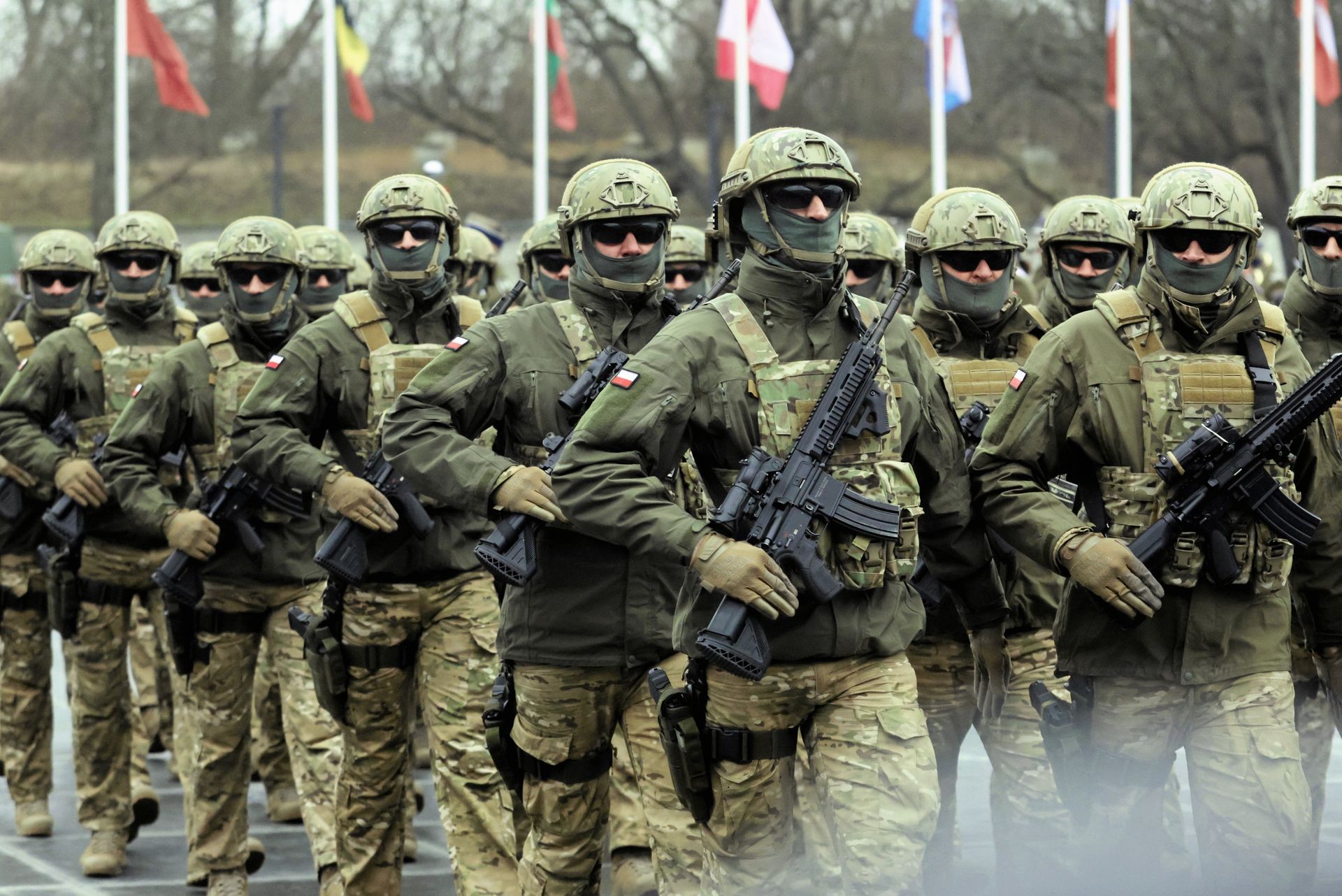
A. That’s it, because there is a new uniform because it used to be a desert and woodland but they sort of blended the two and they made one that works better for urban which is great for us because of the colors of District 1.

Q. Did you have to duplicate what they look like or did were you able to get American uniforms?

A. We bought them, we had them imported from a company in Germany, there isn’t any surplus yet because it’s a new uniform, so we’ve had to buy all new and age them, because normally when you buy surplus it has a bit of wear in it, but when you buy it new it’s usually in really good shape, so we have to work on the uniforms a fair bit to give them some character and give it (the wardrobe) a story.

Q. What do you do to weather a new item like that?

A. The first thing generally is to wash it a lot to try and soften the fibers, and if you put on dirt, even various products like costume dirt, you find that if you use that product and massage it in with Vaseline, and soak it and wash it a few times, then it starts to work.

Q. And it has to look identical for each costume for each character…

A. Exactly, so Lucy who is looking after costume continuity will make sure that everything matches up by taking a lot of photographs and such…

Q. It’s a lot harder than it sounds!

A. Yeah, no it is especially with the story jumping around from time to time, and you want a nice clean smooth continuity.

Q. What sort of stock wardrobe do you start with, or do you start from new?

A. On this, this is a really unusual script because of the story of District 1, it’s dictated in a really different way, so we did a similar thing to what the military might have done, like let’s get all these sweatshirts, we’ll need jeans and sneakers, so we did orders through wholesale companies in exactly that way.

Q. So it’s not a matter of going to second-hand stores and grabbing items?

A. No, we’ve done that for the new arrivals, we got second-hand for them, because they’ve probably been in a refugee camp in Europe waiting to come back if they’re British and not international volunteers, so a lot of their stuff is second-hand, but we tried with the bulk orders of t-shirts and sweat shirts and the District 1-wear, as much as we could, we’ve used organic cotton and non-sweatshop sources as far as we could so we tried to be good.

Q. How would you compare this project with the ones you’ve worked on before?

A. The difference is like normally when you’re building a character you normally talk to the actor and you’ve already had a conversation with the director where you work out a character’s background and history and I like to work in a way that you almost really make a wardrobe, but this script really tells a different story because we’re using these jackets and badges, and we’re just trying to make everyone look like they have a task or a job at hand… so more of their character you would see in the evenings, but you can identify them as someone with a job, or if they have just come into the district…and we sort of talked through all the theory of what people would have been through before they arrived there.

Q. You’ve worked on lower-budget films like Buffalo Soldiers, but then you’ve worked on the Phantom Menace, Elizabeth, The Constant Gardener, so is there anything you find interesting about working in horror?

A. With this, because of the infection, you have to believe it, it has to be real…you don’t want it to stray into anything too heightened, but it’s got to be really extreme, so that has been really interesting…trying to get that balance right, because it isn’t real, it’s such of a sort of queasy story, and if you’re saying that 52 or 51.5 million people were wiped out 6 months earlier, and one of the lead characters, a 17-year-old girl, at one point… Can I talk about this?

(Laughter)

Q. What happens to the girl!

A. I was going to say that Tammy, one of the lead characters of the story, blows her father’s brains out, and that’s really extreme, and you want to be there with her and you need to believe it at that moment--that she would make that decision at that moment--you can’t have anything that might get a laugh, but you need to take it all the way, and yeah it’s really good because it’s fun because you’re throwing all this blood and making the vomit, and having fun building the costumes, but you want to make it real too.

Q. Is there level where you want to say no more gore?

(Laughter)

A. No, I think you can be gratuitous. It’s the levels of the story, so if someone’s had this infection for 3 weeks then you can just go all the way, and so we hold back because if it’s a recent outbreak and the bites have spreads through a crowd of 20 people then it’s instant, it’s just a bite or a scratch, or they might have gotten some spittle or something in their eye, then it would have passed on because it behaves like a snake venom. So it doesn’t have to be like that because what we’re saying is that it just happened.

Q. Would you say that this is the nastiest, goriest film you’ve ever worked on?

A. Yeah, it is yea, we’re chopping people’s heads off with helicopter blades.

(Laughter)

A. Yeah it’s great.

Q. How was it that you came to this project?

A. I came to it because I’ve worked with the Production Designer before and one of the producers I’ve worked with a long time ago.

Q. What did you think when you first read the script.

A. I was really excited, because I know 28 Days Later, and I really like it, so I was really excited.

Q. There was an effort to not use products from sweatshops on this film, is that a current trend?

A. Yeah we did, as much as we can, and we’ve used American Apparel. And I try to use that as much as I can, and we only use eco soaps and try not to waste.

Q. Do you think that because of the budget that some people will try to cut a few pennies and skip that?

A. I don’t know, it wouldn’t surprise me, but we wouldn’t…the industry is pretty wasteful.

Q. So what would you do at the end of the film with all this stuff?

A. Well we usually, normally, you can usually sell things off at 1/2-off at the end, or have a bit of a sale, but there is not going to be much that isn’t destroyed…

(Laughter)

A. Usually there is sale at the end of the film, but the principal wardrobes go back to the studio. And they are stored in boxes in a warehouse.
 
Here are some fantastic 28 weeks later Clips for you to enjoy.
 
Related Movie News
Frozen (2010) The Imaginarium of Doctor Parnassus Wall Street Money Never Sleeps From Paris With Love AD Solomon Kane Moon (2009) The Losers (2010) Planet Hulk Gun Town
Night of the Demons (2009) Night of the Demons, inspired by the 80's cult classic of the same name, and fea...
Night Of The Fleshea...
Release: Feb 09
Butchered
Release: Feb 09
9 Lives of Mara
Release: Feb 09
Dante's Inferno
Release: Feb 09
The Stepfather
Release: Feb 09
Black Dynamite
Release: Feb 16
 
The Wolf Man (2009)
Release: Feb 12
Shutter Island (2008)
Release: Feb 19
The Crazies (2009)
Release: Feb 26
Cop Out
Release: Feb 26
Alice in Wonderland (20...
Release: Mar 05
Season of the Witch (20...
Release: Mar 19